
Spaceward Bound Australia · July 2009
Expedition to Arkaroola & Sturt’s Stony Desert
A planetary and space science field expedition to the South Australian desert, north of the Flinders Ranges — run by Mars Society Australia in collaboration with NASA Spaceward Bound.
Theme — The evolution of life in our solar systemWhen
July 2009
Where
Arkaroola, Marree & Reedy Springs, SA
Participants
27 scientists, teachers & engineers
Partners
MSA × NASA Spaceward Bound
Overview
Field Science in a Mars Analogue
In July 2009, Mars Society Australia’s Spaceward Bound Australia programme, working with NASA Spaceward Bound, led a planetary and space science expedition to Arkaroola, Marree and Reedy Springs in the South Australian desert.
Twenty-seven planetary scientists, geologists, teachers and engineers from the United States and Australia took part. The expedition combined frontline field research with hands-on training, pairing educators directly with scientists who had worked on recent exploration missions to the Moon, Mars and Titan.
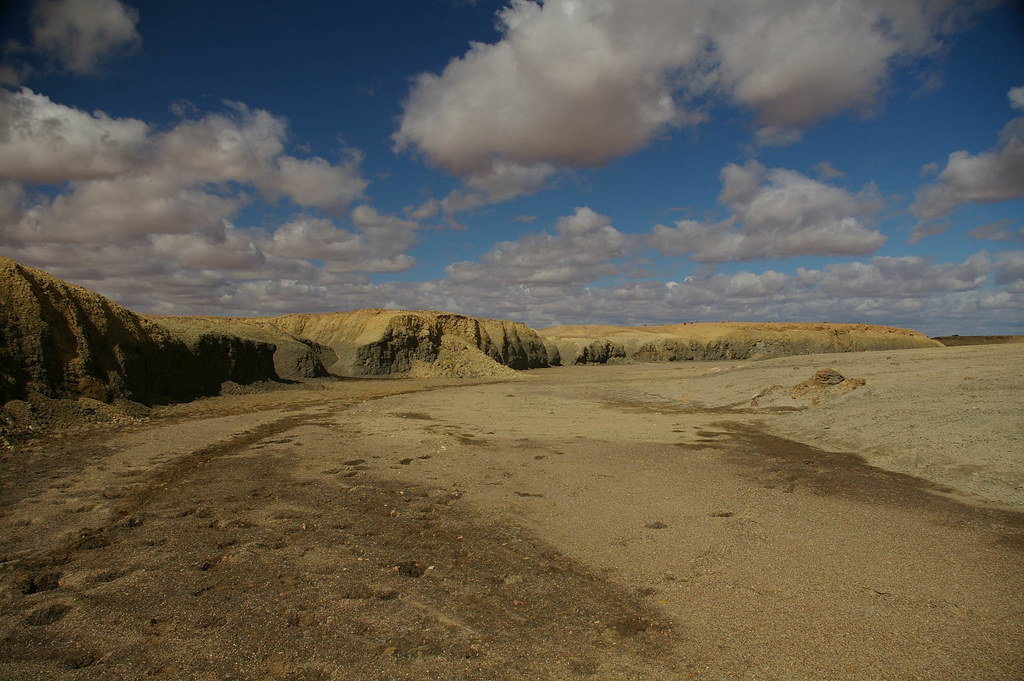
The arid terrain north of the Flinders Ranges offers close analogues to the Martian surface, making it an ideal setting for testing the methods and instruments used to search for evidence of past or present life.
Expedition Aims
Two Goals, One Field Camp
Research the evolution of life
Undertake field science supporting research into how life evolves in our solar system, using Australian desert sites as analogues for Mars.
Bring teachers into the field
Invite teachers and students from the US and Australia to do real, practical field science alongside scientists closely involved in recent missions to the Moon, Mars and Titan.
Science Programme
What the Expedition Studied
The field programme spanned instrument trials, astrobiology and geology — all aimed at refining how we look for life beyond Earth.
Infrared sensing
Trialling infrared sensors for remote detection and field survey work.
Mars analogue sites
Identifying terrestrial analogues relevant to the Mars Science Laboratory (Curiosity) rover.
Biomass in clays
Testing for biomass in clay-mineral deposits adjacent to haematite-rich ironstones.
Follow the water
Studying hydrologic systems as analogues for similar systems on Mars — clues to where life might be found.
Desert crust & microbes
Searching for desert crust and cyanobacteria living beneath translucent desert stones.
Biomineralisation
Examining how microbes biomineralise and the traces they leave as possible markers of past life on Mars.
Fossil or not?
Learning to distinguish genuine fossils from inorganic structures that mimic them.
Hands-on skills
Advancing teachers’ practical science skills across both the field and the laboratory.
The Education Programme
Preparing & Training the Teachers
Before the expedition
Participating teachers read papers on the “follow the water” background theory across six main preparation sessions. Group discussion introduced them to a research culture, encouraging them to apply their own subject knowledge to the reading.
In the field & lab
Teachers picked up a range of new experimental skills:
- General field observation work
- Sampling and measuring data in situ
- Analysing hot-spring systems
- DNA extraction and sterile plate production in the laboratory
- Thermographic (heat-imaging) techniques
- Discussions on translating these skills back to students
Documentation
Read the Full Expedition Report
The complete report on the SBA 2009 expedition — including the science findings, methods and field notes — is available as a PDF.
Download the Report PDF