
Live Q&A · Zoom · Devon Island
Ask an Analogue Astronaut:
Adrian Oberland at FMARS
Mars Society Australia invites you to a live video Q&A with exploration geologist Adrian Oberland, Mission Specialist on Crew 19 at the Flashline Mars Arctic Research Station in the Canadian High Arctic.
When · Sydney
Sat 18 July11:00 am AEST
Duration
1 hourLive Q&A
Format
Live on ZoomLink sent on booking
Meet the crew member
Adrian Oberland
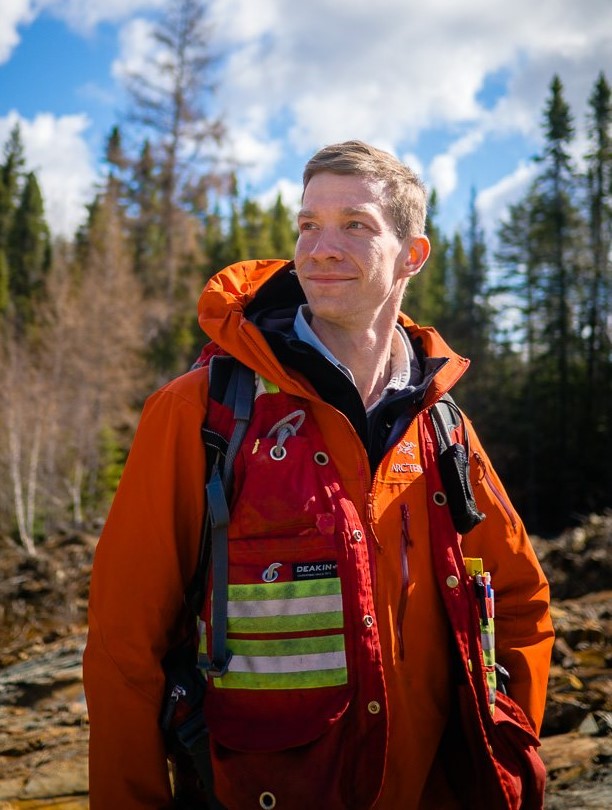
Adrian Oberland is an exploration geologist and field scientist who has worked across Canada, Australia and New Zealand in remote environments including mountainous terrains, the outback and the tundra. He holds a Bachelor’s degree in Geology from Laurentian University and is an avid outdoorsman with a passion for field research.
He brings expertise in geological mapping, satellite remote sensing, GIS and geological modelling software, with a keen interest in bringing innovative technologies into field activities and mineral exploration. Outside of work he is a rock climber, trail runner, scuba diver and world traveller.
At Flashline, Adrian joins an international crew running a full Mars-analogue simulation — living under mission protocols, conducting simulated EVAs in the field and putting exploration geology to work on terrain that stands in for the Red Planet.
The station
Flashline Mars Arctic Research Station
FMARS is the first of two Mars-analogue research stations built and operated by The Mars Society USA. It sits on Haynes Ridge on Devon Island in Nunavut, Canada — the largest uninhabited island on Earth — overlooking the Haughton impact crater, a scar roughly 23 kilometres across left by an impact some 39 million years ago. The barren polar-desert terrain, geological parallels with Mars and sheer isolation make it an ideal rehearsal ground for future planetary missions.
Location
Devon IslandNunavut, Canada
Setting
Haughton Crater~23 km impact structure
Crew 19
“Tiriganiaq”2026 expedition season
As an operational testbed, FMARS supports parallel studies of the technologies, strategies, architecture and human factors involved in sending people to Mars — from field geology and remote sensing to how a small crew adapts to confinement, limited resources and operational uncertainty.
On the night
What we’ll cover
- Life inside a Mars simulation — airlocks, spacesuits for every field excursion, and communication windows run on a deliberate delay.
- Doing real exploration geology on an analogue landscape, and how remote sensing and GIS translate to planetary fieldwork.
- The path from mineral exploration across three continents to a Mission Specialist seat in the High Arctic.
- Living and working in an isolated, confined and extreme environment as part of an international crew.
- Your questions — put directly to Adrian in a live audience Q&A.
Register to attend · Places limited
Join us live on Saturday 18 July
11:00 am Sydney time — Friday evening in North America — for a one-hour live session. Booking is essential; reserve your place through Humanitix and we’ll send the Zoom link ahead of time.
Book on HumanitixCrew biography and station details courtesy of The Mars Society. Learn more about the mission at fmars.marssociety.org.