
Mars Society Australia · Expedition Series
Meet the Crew
Planetary Geology Field Week 2026 · Arkaroola, Northern Flinders Ranges · 9–15 August 2026
Above: the many colourful curves and folds of the Flinders Ranges, the largest mountain range in South Australia, in a false-colour image captured by the Copernicus Sentinel-2 mission.
When9–15 August 2026
WhereArkaroola, SA
Duration7-day round trip
BasecampArkaroola Wilderness Sanctuary
The Expedition
Seven days, one road north
A convoy of four-wheel drives leaves Adelaide on Sunday 9 August 2026, heading north for the Arkaroola Wilderness Sanctuary in the northern Flinders Ranges. It is the latest in a series of Mars Society Australia field expeditions that has been running for around twenty-five years. MSA settled on Arkaroola as its main Australian site for Mars analogue work in about 2001 and has returned regularly since.
The region puts a number of useful features within reach of one basecamp. The Mt Painter and Paralana fault complexes preserve the plumbing of a long-lived hydrothermal system. Mt Gee has high-level sinter and what may be microbialites. Veins at Oppaminda Gorge may hold microfossils of a deep, hot biosphere. Paralana has Australia's only known radioactive warm springs. The sanctuary is also a certified Dark Sky Sanctuary, and the trip falls over the August new moon. Field work runs from Monday 10 to Friday 14 August, with a geological excursion led by Steve Hore of the Geological Survey of South Australia covering more than 800 million years of the region's history.
The crew is a mixed group, which is usual for these trips. Some are experienced Mars analogue researchers with instruments to trial. Others are coming to learn, and a few are there for the ride. Between them they cover field geology, remote sensing and robotics, art practice, space operations, IT research and amateur astronomy. Their profiles follow.
The Crew
Who's heading north
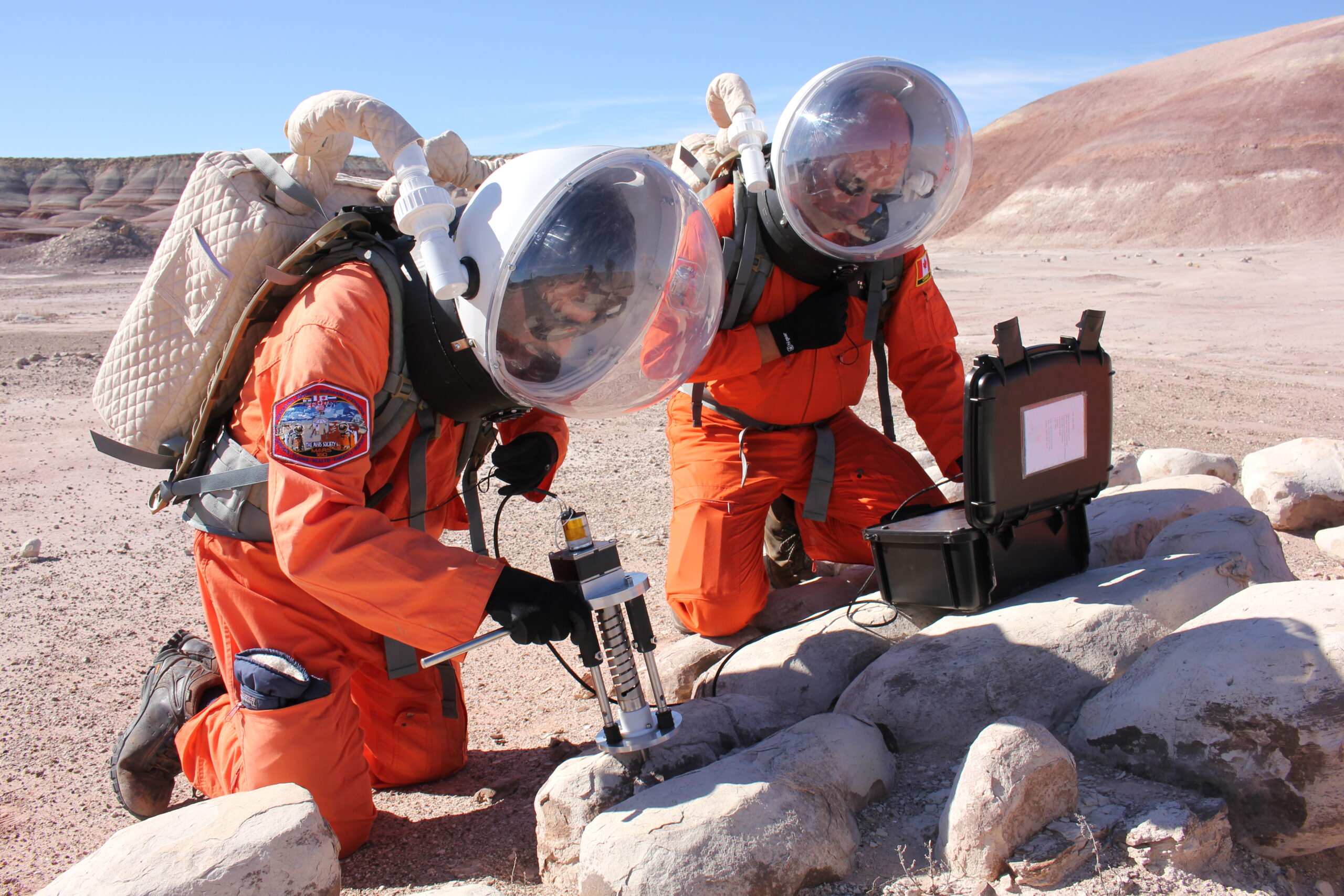
Dr Jonathan Clarke, at left in the orange suit. Image courtesy Jonathan Clarke.
Dr Jonathan Clarke
Secretary, Mars Society Australia · Adjunct Professor, Amity University, Mumbai
Jon has forty years of experience in the geosciences and twenty-five with Mars Society Australia, including seven months spent living inside Mars simulation habitats. His field work has taken him across twelve countries, six continents and three oceans. He provides leadership advice, local knowledge and geological expertise for the expedition.
“Twenty-five years ago MSA selected Arkaroola as our prime region for Mars analogue activities in Australia. This expedition is to further MSA activities there to a new generation.”
On this expedition
Introducing participants to the key sites for Mars analogue research at Arkaroola, including Mt Gee, Oppaminda Gorge and Paralana Springs. He will provide specific geological expertise at each site visited.
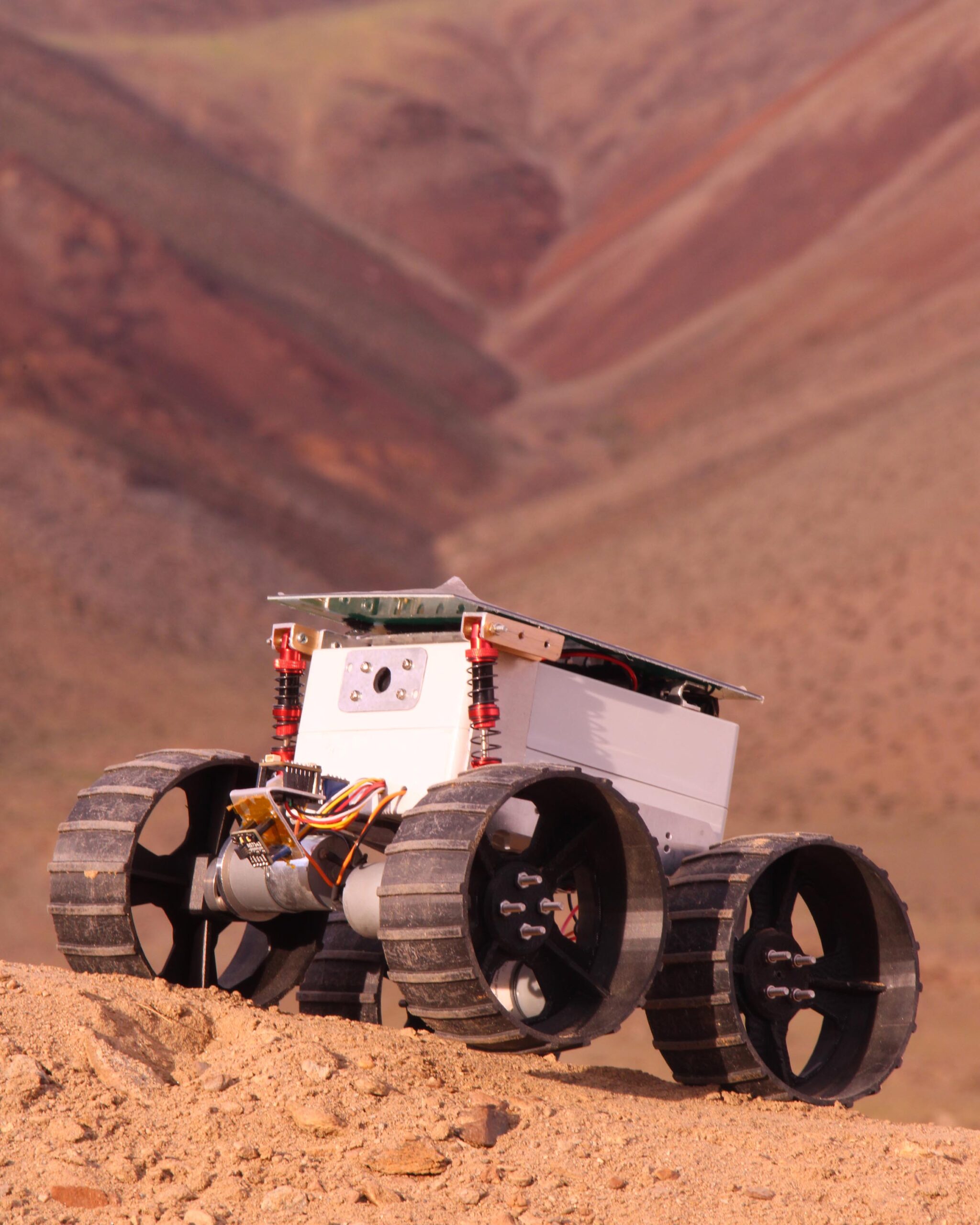
The BitsnBytes rover. Image credit: Steve Hobbs.
Dr Steven Hobbs
Mars Society Australia
Steve holds a Master's in Space Systems Engineering and a PhD in Geographic Information Systems and Remote Sensing, and is researching Martian geomorphology, Earth-based analogues and surface processes. Much of that work involves running around in remote and exotic locations testing home-brewed sensors and robotics, including in near-space environments, then using whatever survives to inform the next generation of Moon and Mars exploration.
His current space systems engineering research is on hyperspectral sensors for deep space applications, tested so far in remote domestic locations and in the high-altitude environment of Ladakh, India. He recently published Sensing Mars: Remote Sensing to Understand the Red Planet (Springer, 2026).
On this expedition
Further field trials of the BitsnBytes rover, alongside hyperspectral sensing of the rare and valuable geological sites throughout the Arkaroola area.
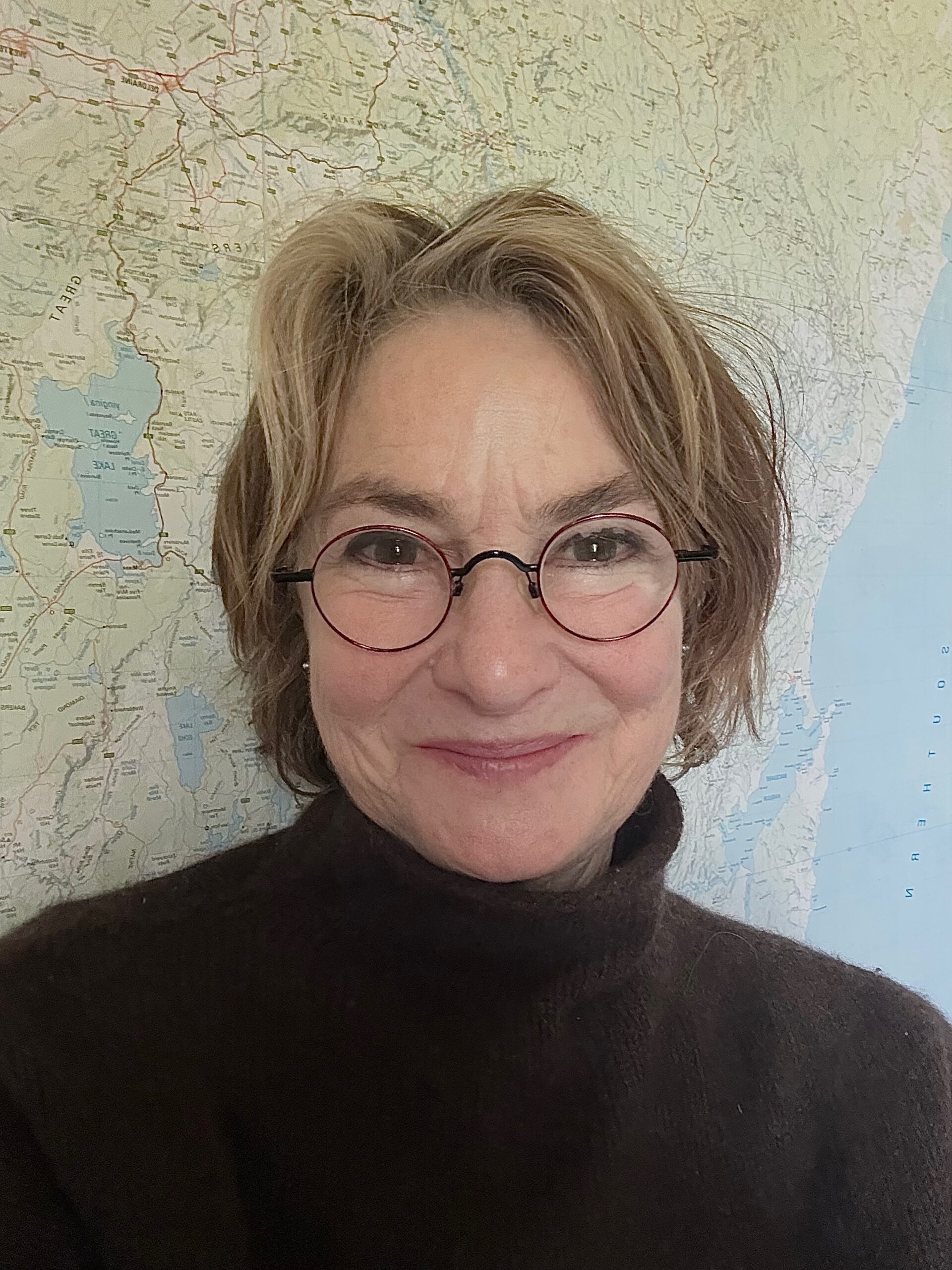
Dr Annalea Beattie. Image courtesy Annalea Beattie.
Dr Annalea Beattie
Director, Mars Society Australia · Adjunct Professor, Centre of Excellence in Astrobiology, Amity University, Mumbai
Annalea is an artist living and working in lutruwita Tasmania, and she is interested in our future off-Earth. She is always wondering what role art will have when we leave our homes to live on other celestial bodies. Her practice focuses on how art making on space science expeditions to Mars-like environments here on Earth can contribute to thinking about how we might live together in confined, hostile and isolated circumstances on planets like Mars.
She taught at RMIT University for twenty-five years and currently teaches doctoral research in the School of Art. She is a member of DarkSky International and of the Association of Mars Explorers, and has substantial Mars analogue experience.
On this expedition
Situating the strategies and techniques of art making as part of the astrobiology and Mars analogue research, using watercolour to focus on the rocks and landforms scientists study as planetary analogues. She is particularly interested in the paleo-hydrothermal systems that mark the iron-rich oxidised environments around Mt Painter, which are found widely across Mars. She will also experiment with rock rubbings of ripple-marked and clastic sedimentary sandstone, of the sort that mirrors the ancient fluvial and lacustrine layouts found inside Martian craters. She is bringing enough drawing materials for anyone who wants to join her.
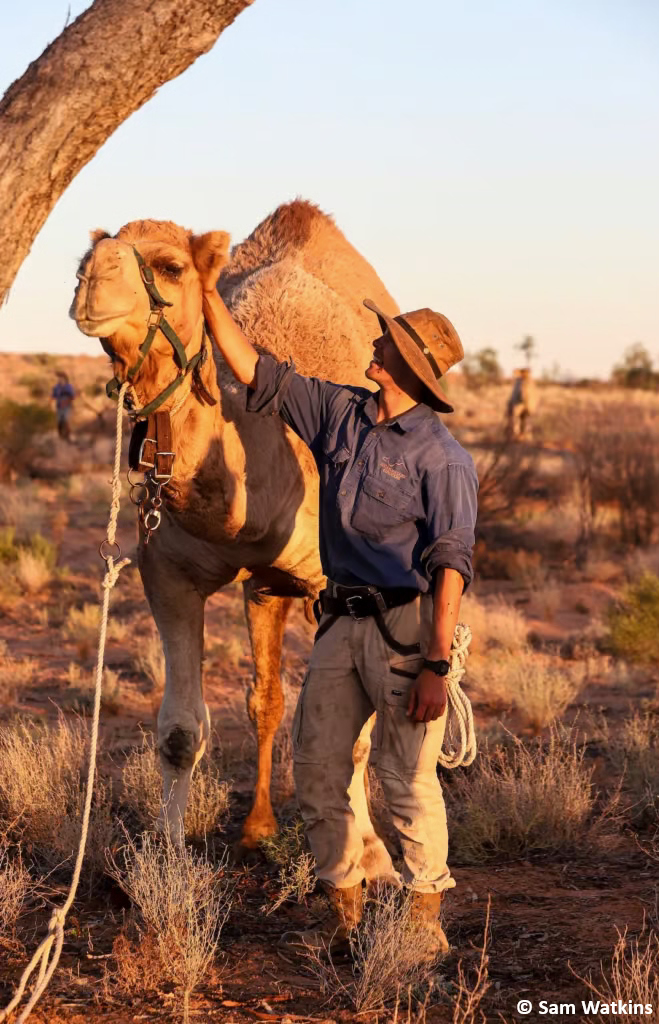
Thomas Windsor. Image © Sam Watkins, 2023.
Thomas Windsor
Expedition Coordinator · Board Member, Mars Society Australia
Thomas isn't sure what originally got him interested in planetary exploration, having spent the last several years meandering through odd jobs in interesting places. That at least provided plenty of experience in remote-area fieldwork and logistics, which was recently put to the test on a twelve-month assignment to Antarctica as part of the 77th ANARE. He joined MSA as a board member in late 2022 and has since been on two geological trips to planetary analogue environments in Ladakh, Himalayan India.
He is based in Adelaide, working as a commercial diver. In winter he takes time off to support scientific surveys in the Simpson Desert as an expedition cameleer for the Outback Camel Co., spending many a night in a swag under clear starry skies. Perhaps that is where the planetary exploration bug finally took hold.
On this expedition
Thomas's intentions are for everyone to be well fed, well slept, well informed and whelmed in a general sense, and for the vehicles to make it to where they need to be in a timely fashion. He is most looking forward to learning about rocks from the clever people whose job it is to bother them.

Ryan Kupferle. Image courtesy Ryan Kupferle.
Ryan Kupferle
Director & Treasurer, Mars Society Australia
Ryan has more than a decade of experience in project and operations management, holds an MBA and a Graduate Diploma in Management, and is currently studying a Master of Space Operations at UNSW Canberra.
He is joining Planetary Geology Field Week to learn. As he weighs up a possible PhD focused on operations for crewed lunar and Martian missions, the expedition is a chance to get out in the field, be part of the work, and see what questions grab him.
On this expedition
Taking part in the field programme while scoping potential research directions, and trying his hand at astrophotography in one of the world's few certified Dark Sky Sanctuaries.
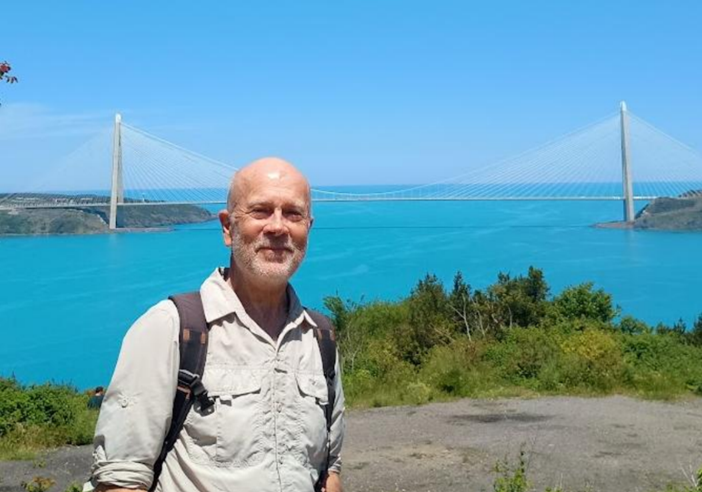
Dr Sandy Dance. Image courtesy Sandy Dance.
Dr Sandy Dance
Member, Mars Society Australia
Sandy worked with the Bureau of Meteorology as an IT researcher for twenty-two years before retiring in 2019, and before that carried out research in computer vision at the University of Melbourne. He has been a keen proponent of Mars exploration ever since reading Robert Zubrin's The Case for Mars in 1996, and was present at the founding of Mars Society Australia around 2001.
His enthusiasm for this trip was kindled by an earlier Mars Society expedition to Central Australia exploring impact craters. He found it fascinating, and learnt a great deal of geology from the experts who were along.
On this expedition
No specific project this time. Sandy will be there as a keen amateur.
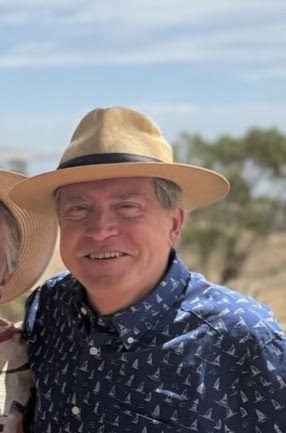
Ian Furness. Image courtesy Ian Furness.
Ian Furness
Secretary, Astronomical Society of South Australia
Ian is retired. His scientific grounding was in physics, including astrophysics, with further study in occupational health and occupational hygiene. He is a retired Fellow of the Australian Institute of Health and Safety and has held leadership roles with the Australasian Radiation Protection Society. As for geology, he notes that his younger son is a geologist, if that counts.
He expresses his enthusiasm for all matters space-related through volunteering as Secretary of the Astronomical Society of South Australia. All space stuff interests him, including the nature of space objects such as the Earth and Mars.
“I'm participating principally as a ‘geotourist’. I'll undoubtedly be out of my depth with much of the geology terminology and scientific techniques, but I hope to conclude the trip with a much better understanding of the geological aspects of this fascinating region of the world. It will be intriguing to find out what our knowledge about Earth can tell us about Mars.”
On this expedition
Mainly along for the ride, but happy to help people carry their equipment or record measurements. He is also hoping to enjoy the dark skies around Arkaroola from an astronomical point of view.
Also on the Programme
Expedition leadership & specialist input
Alongside the crew profiled above, the field programme draws on the following organisers and specialists.
Steve Hore
Geological Survey of South Australia
Leads the geological excursion through the region's succession and evolution, covering more than 800 million years from the Adelaide Rift and Cryogenian glaciation through to Cainozoic regolith along the Paralana fault.
Dr Clare Fletcher
Australian Centre for Astrobiology, UNSW
An academic specialising in the exogeoconservation of Mars, which deals with how sites of scientific and heritage value on another planet are identified and protected.
Dr Bonnie Teece
Assistant Research Professor, Department of Astronomy, Cornell University
A geologist and planetary scientist, and a former postdoctoral researcher at NASA's Jet Propulsion Laboratory.
About & Contact
Mars Society Australia
Mars Society Australia is a volunteer-run, not-for-profit organisation dedicated to advancing the exploration and settlement of Mars. Since its founding in 2001 it has run field expeditions to Australian and international planetary analogue sites, developed field robotics and instrumentation, published research, and supported students and early-career researchers entering the planetary sciences.
Planetary Geology Field Week 2026 runs from 9 to 15 August 2026, departing from and returning to Adelaide, with basecamp at the Arkaroola Wilderness Sanctuary. Expressions of interest remain open.
Mars Society Australia · Reg. No. A1009943H · ABN 32 609 695 701
Expedition details
Media & general enquiries
Earl White, President Mars Society Australia
earl@marssociety.org.au
+61 (0) 407 021 171 Thomas Windsor, Expedition Coordinator
thomas@marssociety.org.au
+61 (0) 417 876 363 Science & field itinerary Dr Jonathan Clarke, Secretary, MSA
jon.clarke@bigpond.com Online marssociety.au
earl@marssociety.org.au
+61 (0) 407 021 171 Thomas Windsor, Expedition Coordinator
thomas@marssociety.org.au
+61 (0) 417 876 363 Science & field itinerary Dr Jonathan Clarke, Secretary, MSA
jon.clarke@bigpond.com Online marssociety.au