
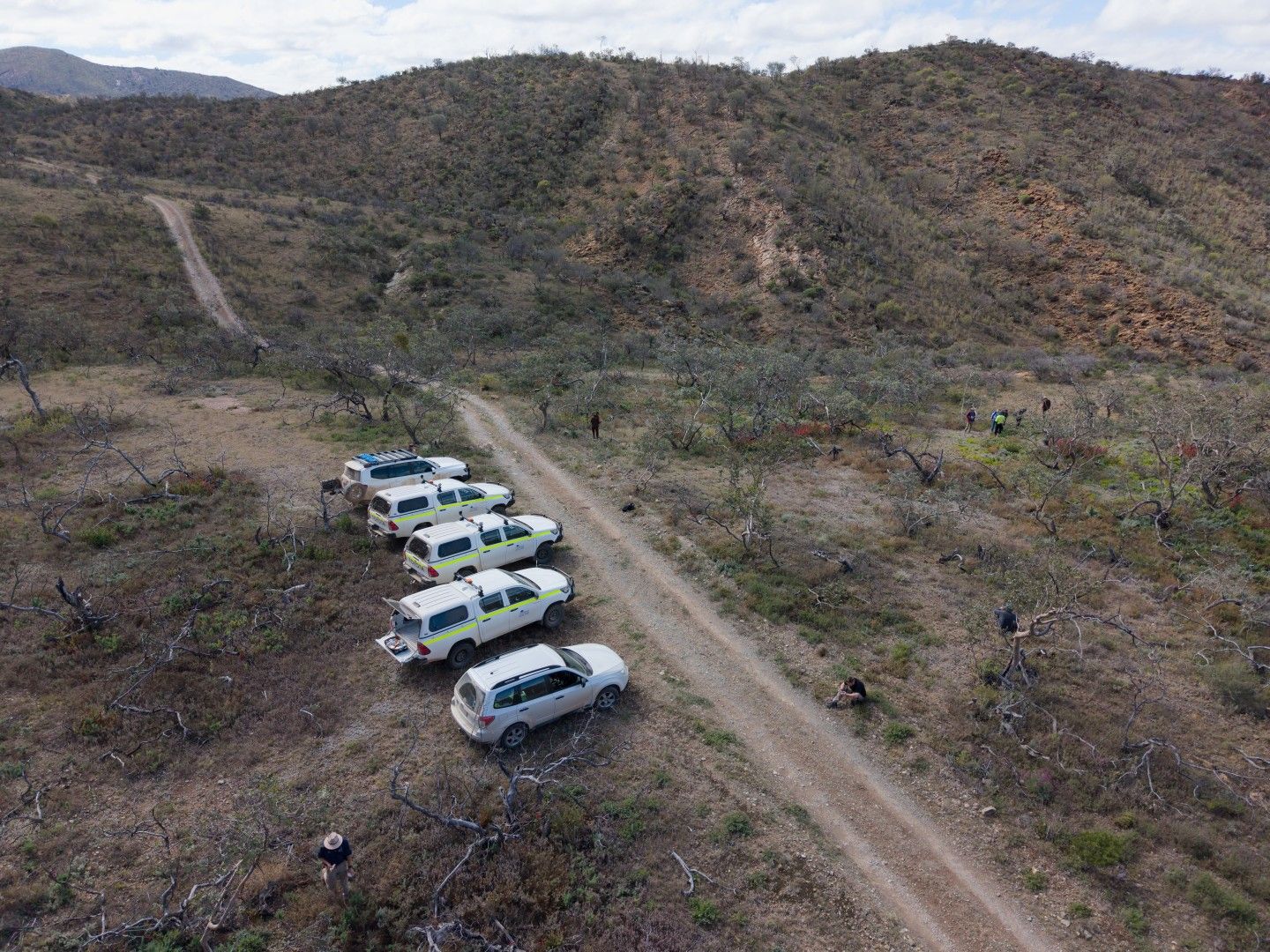
Planetary Geology Field Week, Arkaroola 2026
Rock Wallaby 1
Trip diary, part 2 of 3: North at last
Photo: RW1 team
By Wednesday morning we'd spent three nights in Hawker waiting for the roads north to reopen (part 1 covers how we filled in the time). This part picks up as the sun came out and things started to move.
The road opens
A sunny day, and Hawker got very busy very quickly. About a hundred and fifty riders from a BMW Motorrad adventure ride rolled into town, along with a fleet of support vehicles, having left Port Augusta early that morning. It turned out their Uluru to Adelaide ride had also been held up by the rain, and Arkaroola was on their itinerary too. Between their arrival and a message from Arkaroola that its roads and tracks were open to 4WDs as far west as Copley, we decided it was time to get ready to go.
Rumour had it that the BMW organisers had a direct line to DIT head office and fully expected the Outback Highway to open. We kept refreshing the official outback road closures map anyway.
Meanwhile the coffee machine at Flinders Food Co. was clocking up serious mileage, with queues out the door and the car park and street full of motorbikes, utes, trailers and support vans. Steve Hobbs was out on the busy footpath taking hyperspectral photos of rocks, with a few interested onlookers.
Vehicles loaded, team ready. Then the road opened.
We slotted our convoy in between waves of motorbikes, and for a while it felt like a scene from Mad Max.
The run from Hawker to Copley meant crossing a lot of creeks. Where there was still water over the highway it was shallow, but you could see where the first big flows had eaten into the bitumen on the downstream side. The road crews had done a great job clearing debris, and all things considered it was an easy drive.
From Copley to Arkaroola the road is gravel. It was in good condition too, though the creeks were deeper and flowing faster. Nothing the Hiluxes couldn't handle. The fords have a hard, rocky natural base, just a bit bumpy at times. We spent the drive playing leapfrog with the BMW convoy, which was by now very strung out, and their support trailers were filling up with drowned bikes. Watching the riders take on the creek crossings was good fun. We also spotted our first big patches of Sturt's desert pea (Swainsona formosa), and Ryan Kupferle was capturing all of it on camera.
Arkaroola village was beautiful, and busy. After a quick orientation at the Shearers' Quarters just down the road, we joined the BMW crowd for their big celebration dinner.
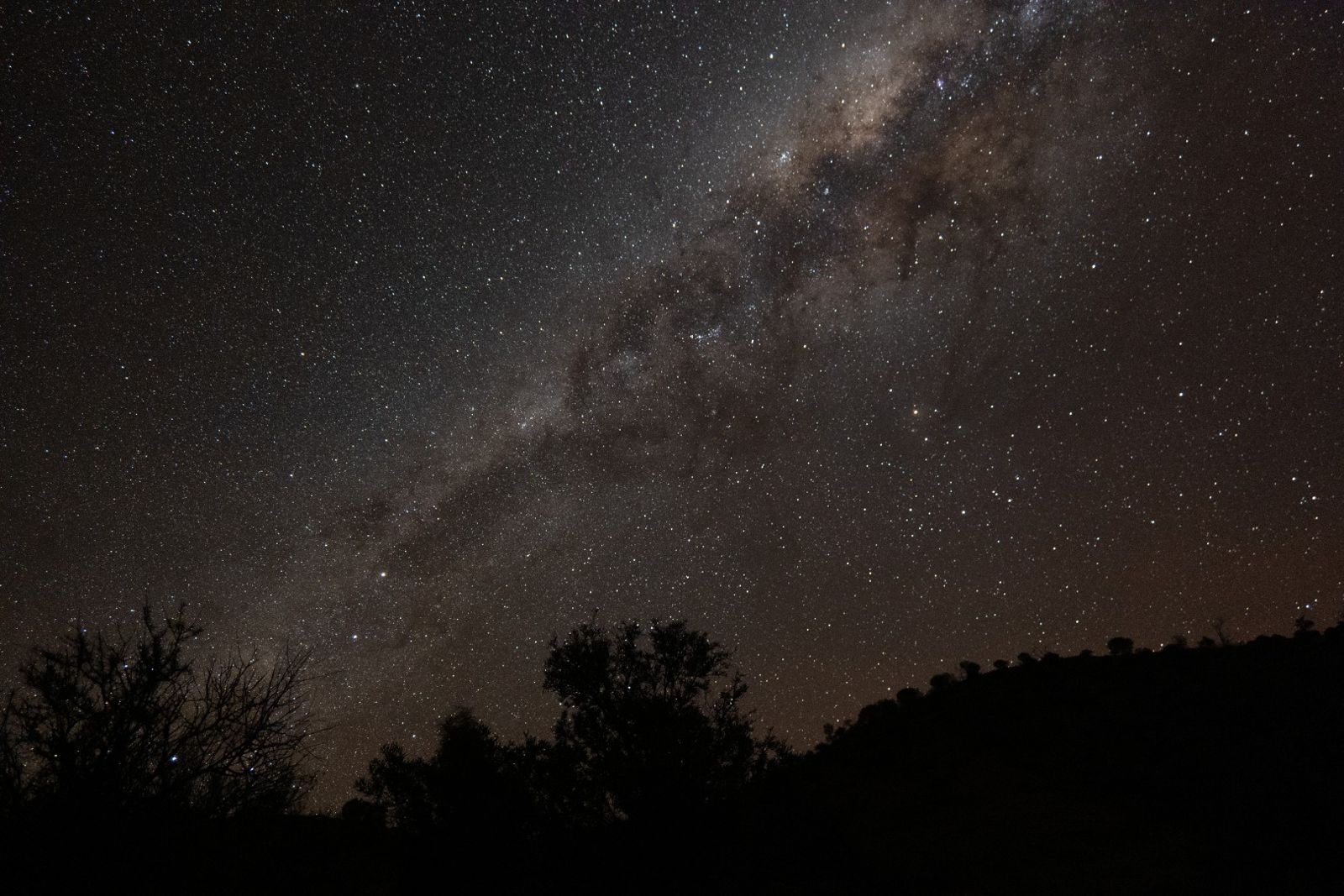
We finished a very long day with a stargazing session run by Doug Sprigg at the Arkaroola Wilderness Sanctuary observatory. Images live-stacked from the camera on the Schmidt-Cassegrain telescope were shown on big screens inside, bringing up galaxies, globular clusters and nebulae. Then we stepped outside into an inky black sky full of stars.
Into the field with Steve Hore
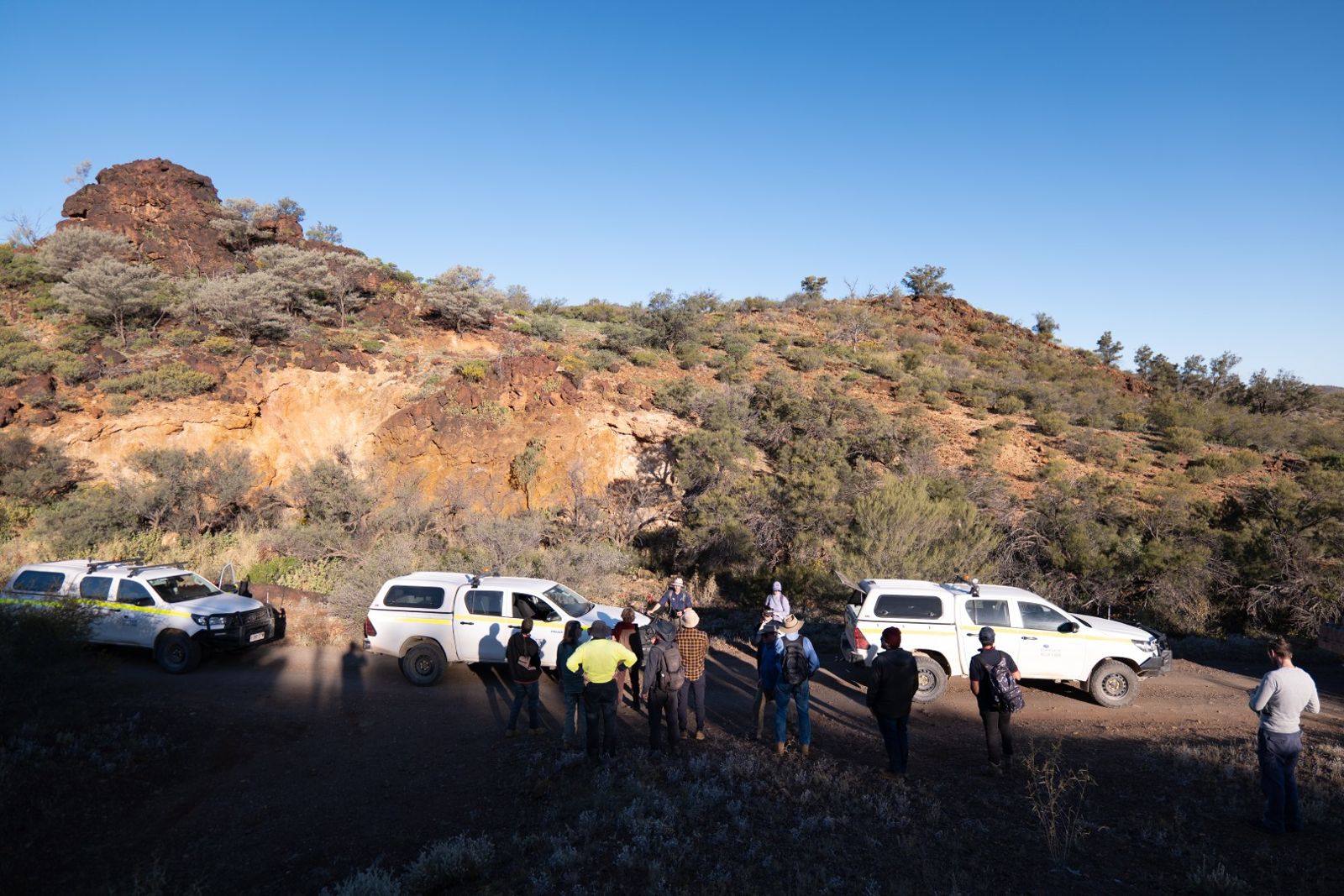
Our first full day at Arkaroola, visiting geological sites with Steve Hore.
Early on we saw some stilbite, a mineral you don't come across all that often.
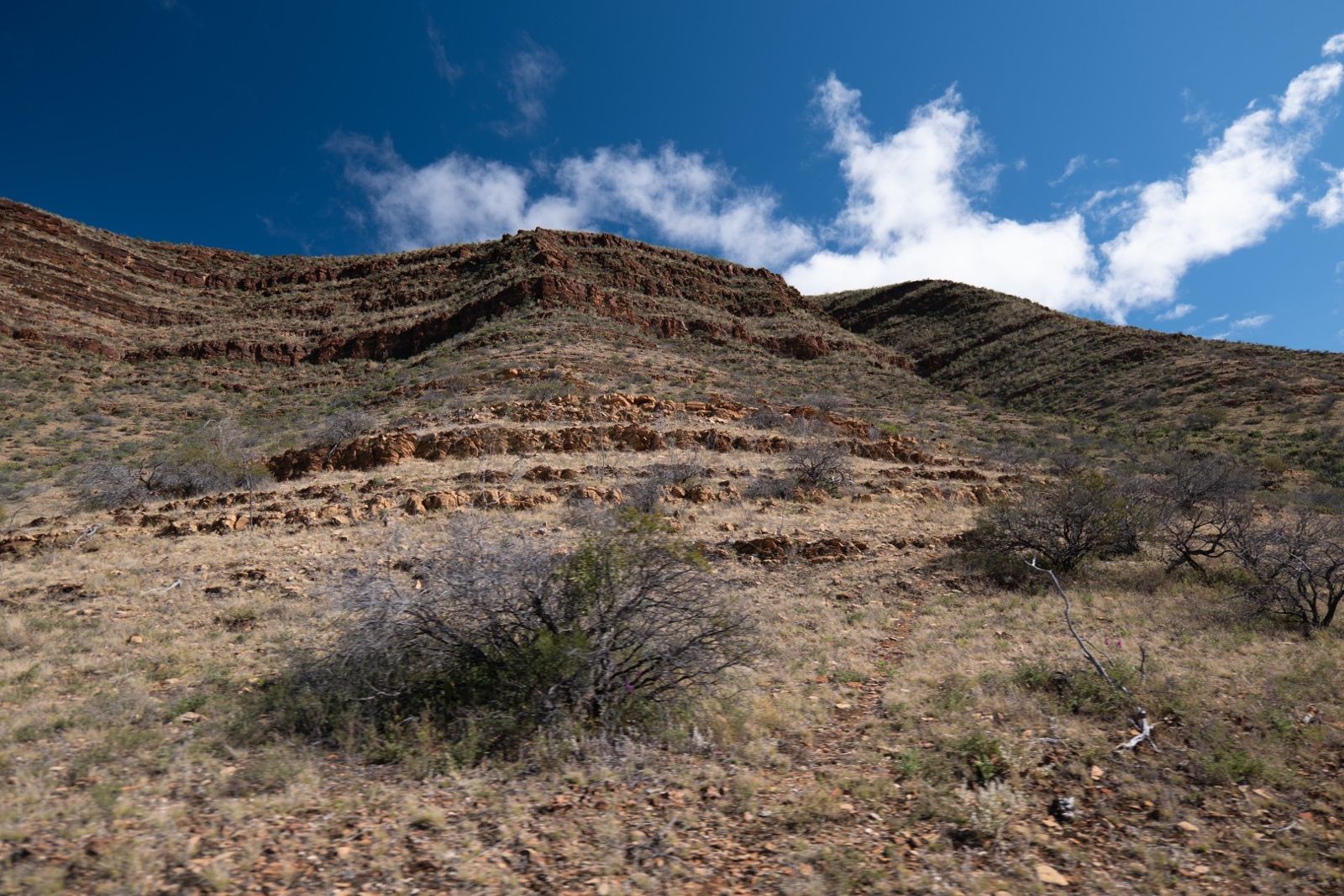
At one outcrop there was pebbly material laid down by fast-flowing water, cracked mud from a pool that had dried up, and ripples left by water moving across fine sediment. They sit in layers right next to each other, but were laid down enormous spans of time apart. These rocks are hundreds of millions of years old.
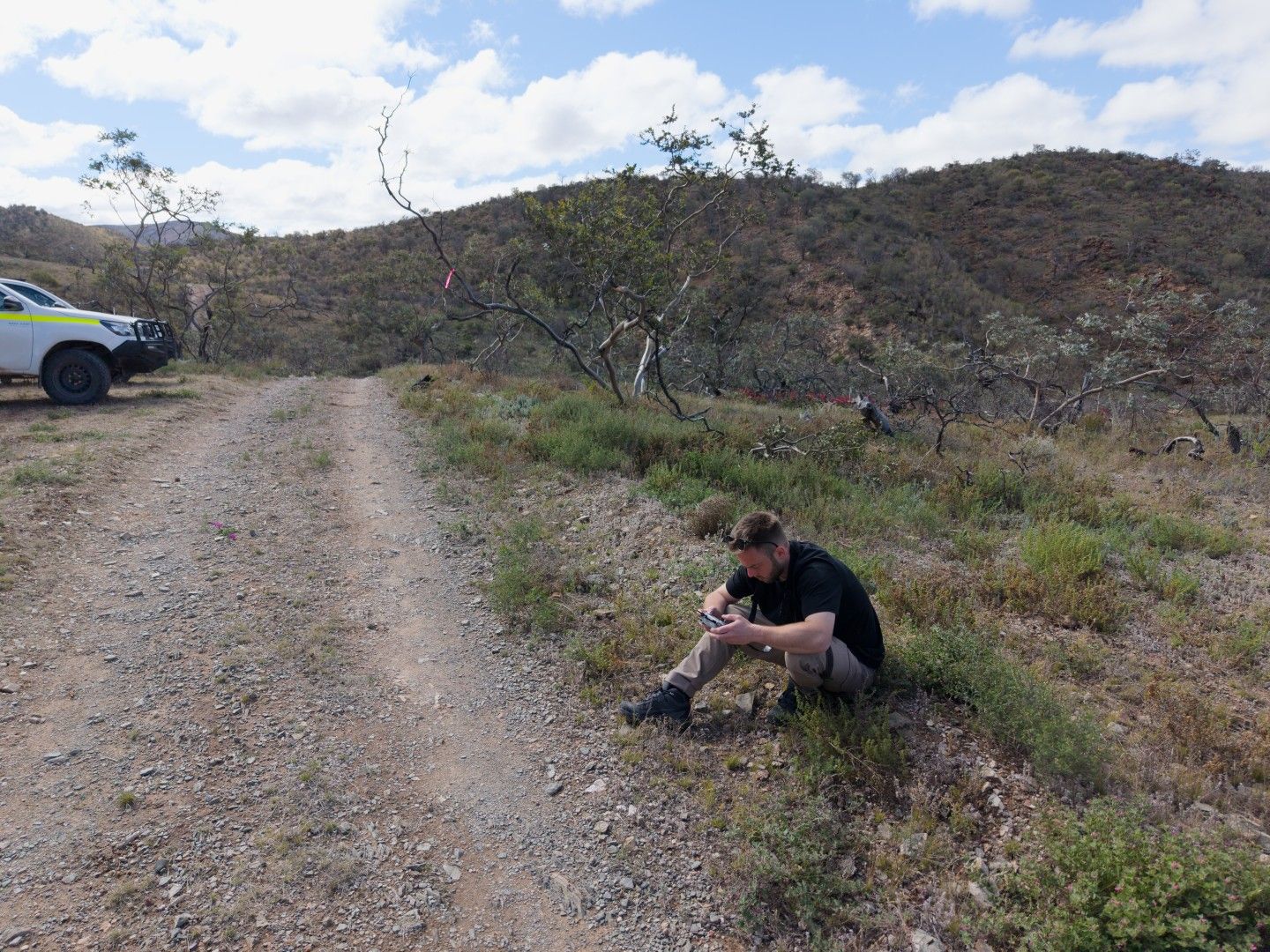
There was time for some rock foraging among the gums, and Andrew's detector was beeping away the whole time, logging the radiation levels.
We also got to see one of the last remaining stands of Acacia araneosa, a small spidery wattle with long drooping branches. Lovely, peaceful little trees.
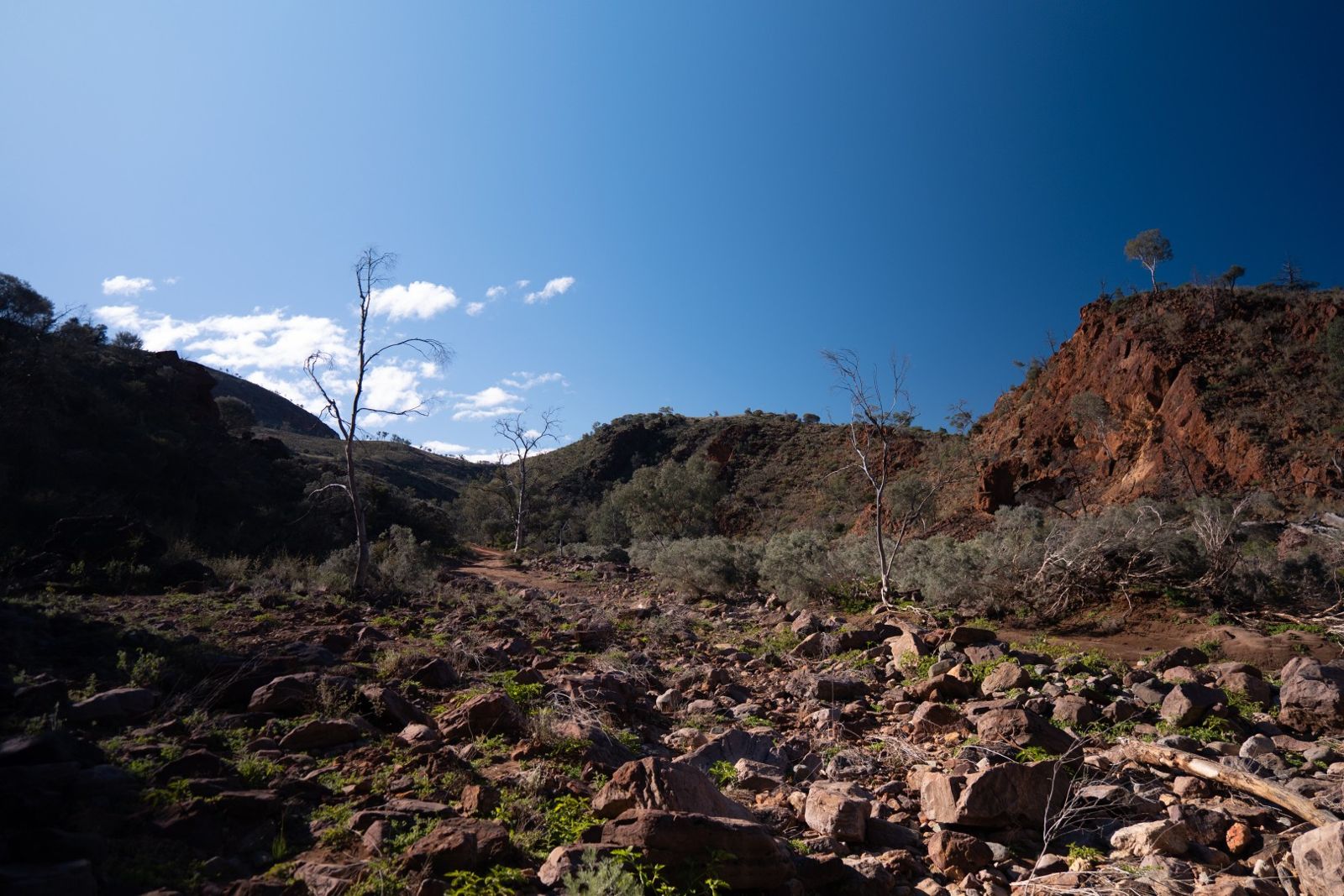
The cliffs beside the creek were made of glacial till from the Cryogenian period, about 700 million years ago. Till is the jumbled mix of mud, sand and boulders that glaciers leave behind.
With the sun getting low we made a quick stop at the Jasper Twins, where we found some rocks with dendrites, the fern-like mineral growths that look a lot like tiny fossil plants but aren't.